
Welcome to The Connection,
NASAP’s Online Newsletter
May 2026 Issue
Dear Fellow Adlerians:
This May 2026 issue marks my first anniversary as editor of The Connection. The past year has been a rewarding time for me, and I have especially enjoyed my correspondence with different contributors in the past 12 months. It is our readers and contributors who make The Connection such a rich, enjoyable, and informative publication.
In the past year, I have worked to introduce some innovations to this staid newsletter. The first has been to invite guest writers outside of the Adlerian sphere to reflect on their work from an Adlerian lens. I believe this exercise demonstrates how universal Adler’s pioneering theories were and, consequently, how applicable Individual Psychology is to the many branches of psychology that have emerged in the subsequent century. In this issue, I am pleased to present an article, surprisingly, by a behavioralist, Dr. Deborah Rozman, discussing how her approach to managing anxiety aligns with key Adlerian concepts.
Another innovation I’ve introduced has been devoting the July issue to the annual conference. With the next conference approaching at the end of May, I invite our readers to consider planning an article on this special gathering in Minneapolis to share in the July 2026 Connection.
Thank you to everyone who has made The Connection such a quality publication, and who has made this past year such a rewarding experience for me. Please enjoy this current issue!
Sincerely,
Ellen Alderton, Editor
President’s Message
The Strength of the Collective
Dear Fellow NASAP Members:
My tenure is coming to a close. At the conclusion of our annual conference in May, I will pass the gavel to our president-elect, Ben Rader, as he becomes NASAP’s newest president.
I accepted the nomination to lead this organization not because of what I wanted from NASAP, but because of what I hoped to offer. Driven by the principle of social interest, I gave all I was able to give. Looking back, I can say with certainty: while success feels good, the act of contributing feels better.
Serving as your president has been an immense honor—one that I have never taken lightly. To the membership: I thank you for the trust you placed in me. It has been a privilege to serve this community, and for that honor, I raise my glass to you in a final salute of gratitude.
I began this presidency with ambitious goals for membership growth, increased diversity, and expanded practical training. If I use those original grandiose ideas as the sole yardstick for my success, I could say I have fallen short. Membership has grown, yet retention remains a challenge; the needle of diversity has moved, though not as far as I envisioned; and our training programs met with the unpredictable "life-ness" that Robert Burns famously noted—the best-laid plans often go awry.
However, leadership has taught me that the "unpredictable" is where the real learning happens. I have learned that the success of NASAP cannot rest on the shoulders of one person, or even the collective shoulders of a few dedicated leaders.
Success Requires All of Us
There is an old adage: If you want to go fast, go alone; if you want to go far, go together. To reach the distances we envision, we must move as one—mind, body, and spirit.
My parting vision for this organization is simple: The president sets the direction. The board and COR act as the GPS to keep us on course. The membership is the engine that powers us forward. Without the engine, the GPS and the driver are just sitting in a stationary vehicle. With it, NASAP becomes an organization to be reckoned with.
We have a competent, energetic president-elect ready to take the helm. Many of his ambitious ideas will only be realized if they are met with your unwavering support. I encourage each of you to commit yourselves to his leadership.
Let us not worry about going fast. Let us focus on reaching new heights, together.
With gratitude and social interest,
Hallie M. Williams, Sr.
President, North American Society of Adlerian Psychology


Updates from HQ, May 2026
By Susan Belangee, Ph.D., NASAP Executive Director
This May/June issue of The Connection is our final chance to highlight the upcoming annual conference. I do hope that you will consider joining us in Minneapolis this year! The line-up of sessions, speakers, and most importantly, the chance to make new Adlerian friends and visit with old ones just can't be beat! My life is pretty hectic and crazy at the moment, tending to the details to ensure a wonderful event for everyone. That won't stop me from answering your questions about conference, though. Please send along anything you need help with and I'll do my best to answer you quickly. You can email me at executivedirector@alfredadler.org
For those who may not know, the annual conference is more of a casual vibe than a stuffy, overly professional one. Business casual attire is perfect for the conference. The one exception is the closing banquet, for which some folks choose to get a little fancier. For those already registered, I can't wait to see you in a few short weeks. For those who have been on the fence, I hope you hop off and join us this year. You won't regret it!
Consider this your final chance to register with the Early Bird discount. That ends May 1 at 11:59 PM EST. So be sure to sign up by then. The hotel block is filling quickly so after you register, be sure to make your reservation.
Registration link - https://nasap.memberclicks.net/2026-conference#/
Hotel link - https://www.hilton.com/en/attend-my-event/mspbsdt-nam-cd0dfa86-ac7e-4e4c-892d-781403f87d47/
Information with conference details will be sent out to registrants around mid-May. The usual brochure and information in the conference app will be available for you to review and plan the sessions you'd like to attend around that time.
Come say hello in Minneapolis! Take pictures and send them in for inclusion in the next issue of The Connection!
Cheers,
Susan
Call for Conference Articles
The 2026 Annual Conference will take place May 28-31 in Minneapolis, Minnesota. Our subsequent July issue of The Connection will be dedicated to reporting on this special gathering. As you make your plans to attend the conference, please also consider how you might submit an article about your experience. Whether you wish to write about a workshop you are offering or an event you have attended, submissions are most welcome. Please send your contribution, as a Word or Google document, to NASAPNews@gmail.com

Earn Free Continuing Education Credits
The free continuing education reading for the month of May is Friedmann, A. (2018/1934). Child of crisis. In Found in Translation (Vol. 3): Children and education: Early contributions to raising a child – The human, the artist, the master of tasks (pp. 132-137). NASAP. This article was originally published in 1934 in the German language journal Internationale Zeitschrift fur Individualpsychologie (International Journal of Individual Psychology).
Alice Friedmann (1897-1980) was an advisor for the Adler education counseling centers in Vienna from 1920 until their dissolution in 1934. She also led a treatment home based on Individual Psychology in Vienna for “difficult to educate and nervous” children. She emigrated to New York in 1938 where she worked at Lebanon Hospital and had a private practice. This article is a case study of an adopted immigrant girl (from America to Vienna) with no fluency in German. Low academic achievement, stealing, lying, and cheating are presented, describing her treatment in an Individual Psychology school setting.
You can earn 0.3 CE hours for reading this article at NASAP.Thinkific.com. You will be asked to create an account if you don’t have one already. You can find this article on the website by searching for the author.
Our thanks go to Rocky Garrison, Ph.D., who thoughtfully selects the readings for CE credits in each issue.


NASAP Section Update
News from the TLC Section (Transformative Leadership and Coaching)
The section meets typically every other month for a free webinar open to anyone at the intersection of Adlerian theory, leadership, and/or coaching. We have chosen to open these meetings to all, including non-NASAP members, with the intention of spreading the “Adlerian word” more widely—particularly within the leadership and coaching worlds, where Individual Psychology is still not well known.
Our objective, which we have largely been reaching, is to increase exposure to Adlerian concepts and, over time, to welcome new members into NASAP. During our bi-monthly meetings, we: interview coaches, leaders, and Adlerians about their career paths, discuss the business of coaching and entrepreneurship more broadly, offer coaching demonstrations followed by group discussion, facilitate tag-team coaching sessions, and explore leadership and coaching topics (for example: discouragement in the face of world events, or the impact of AI on our work).
We regularly ask our members and participants for feedback on what they want and need. Our goal is to serve our community and respond to their evolving interests. We remain open to ongoing dialogue about how this section can best support and engage its members.
Seeking New TLC Chair/Co-Chairs
On a different note, our time as co-chairs of this section will come to an end after the conference in May. We are now looking for someone, or a pair, to step into the co-chair role. If you are curious about what the role involves, or think you might be interested, please reach out to either of us. We would truly welcome the conversation. The only requirement is that you are an active NASAP member.
Best Wishes,
Pascale Brady and Kevin O’Connor
Adler’s High Art
By Christopher Eriksson, Ph.D.
Leonardo da Vinci, the famous Renaissance artist, engineer, scientist, and inventor, is recognized as one of the most creative individuals of all time. He is perhaps best known in the general public’s mind for his paintings of the Mona Lisa and The Last Supper. He demonstrated to the world the importance of artistic ability in creating scientific knowledge:
The artist sees what others only catch a glimpse of; learn how to see, realize that everything connects to everything else. (Gelb, 2004, p. 96).
Adler was of the same opinion, seeing artists and poets as the leaders on the path to discovering universal truths. Adler linked this to the poet’s successful use of the gift of intuition in discerning an individual’s style of life as an indivisible whole. Adler observed that intuition is quite common in people and a thoroughly human gift, which Einstein and other great scientists experienced and acknowledged (Eriksson, 2022, 78; Bohm, 2004, 46). It was reading Shakespeare, Goethe, the Bible, and fairy tales that most inspired Adler to develop the principles of Individual Psychology as a psychology of use, of “acting as if” (Adler, 1964, p. 329). Accordingly, Adler recommended that therapists should be striving to gain some very definite abilities for their job at hand…


Latino Clergy Enjoy Training in Lifestyle Assessment and ER Interpretation
By Ellen Alderton
In Summer 2025, I was thrilled to win a grant from the American Psychoanalytic Foundation to offer lifestyle assessment training to Latino clergy. In Latino communities, churches, a venue trusted by community members in and outside of the faith alike, present an important forum for promoting community and mental well-being. For many Latinos experiencing mental health challenges, the first person outside of their immediate family whom they will turn to for help is often a faith leader.
In my career, I have worked for two national Latino-serving organizations, and I am currently employed by Hispanic Access Foundation. This national nonprofit has connections to thousands of Latino faith leaders throughout the country. These clergy members, moreover, continue to ask for new resources and tools to support the mental health needs of the congregations and communities they serve. It therefore seemed a propitious time to partner with my place of work to recruit clergy members and train them in Individual Psychology.
This January, I was pleased to offer 28 clergy members a three-hour virtual training on a method of lifestyle assessment I learned while living in Vienna, Austria in the 1990s. This method was passed down verbally directly from Alfred Adler: to his student, Edith Foster; to her student, Conrad Kaplan; and from Kaplan directly to me. I also had the opportunity to meet with Foster, an émigrée to Sonora, California, and spend three days with her discussing the method, her personal impressions of Adler, and her experiences during the founding years of the Individual Psychology movement in her hometown of Vienna.
The clergy I trained for this project had no previous knowledge of Adlerian Psychology. The training, therefore, introduced important key tenets such as social interest, striving for superiority, the family constellation, and the crucial role of encouragement in establishing a path to wellness.
Since a three-hour webinar could prove mentally exhausting, I made every effort to keep the training interactive and fun, with plenty of exercises and opportunities to parse out the meanings of ERs of famous and everyday people, a demonstration of a full lifestyle assessment, and ample break-out sessions and discussion opportunities.
Participants also received a free copy of my book on Adler’s technique, Soul Metaphors, and had the opportunity to sign up for a free consultation with an Adlerian counselor to discuss how to integrate lifestyle assessment into their work with their congregations. I was thrilled to partner with bilingual counselors, Miosotis Cotto of Puerto Rico, and Fernanda Pelaez of Mexico, to offer this component of the grant deliverables.
Most gratifying of all, the pastors enjoyed the session and felt that they had benefited from it. Reviews of the training were overwhelmingly positive, with attendees reporting that the activities were engaging, that they had learned key Adlerian concepts, and that they intended to integrate the learnings into their work with congregants and community members.
I will be surveying the pastors in July to learn about their longer term experiences with incorporating Adlerian Psychology in their ministerial work. I look forward to sharing additional information on those findings with readers of The Connection later in the year.
Ellen Alderton edits The Connection. She is also the author of Soul Metaphors: The Art of Adlerian Early Memory Interpretation. This evidence-based book draws on interviews with dozens of volunteers and presents Adler’s previously unpublished method of lifestyle assessment, which has been passed down verbally over the years.
War Anxiety? Heart Coherence Tools Can Help Regulate Your Nervous System
By Deborah Rozman, Ph.D.
More and more people these days are on edge from fear of government decisions, personal and global economic disruptions, and the threat of larger war. The list of stressors and fears people are coping with raises an important question: What can we do to help regain and maintain our personal balance during these unpredictable times?
As a behavioral psychologist, I am aware how important it is for people to learn how to calm anxiety, worry, and stress. We know that bombarding ourselves constantly with all the stresses of the news and social media affects our mental, emotional, and physical well-being. We need to take time to reconnect with our hearts instead of constantly doom-scrolling and reacting to every headline.
As we understand from Adlerian therapy, when something impacts our mind and our emotions, our inner biochemistry is affected, including our hormones and immune system. That's why we often can't sleep when we're anxious, or even end up having symptoms of PTSD. This is where increasing our heart coherence can help.
Heart coherence is a measurable, high-performance state where our physical, mental, and emotional systems synchronize, leading to increased nervous system ease and stability. As a practice, the goal is to synchronize our heart, brain, and nervous system so that we are more whole and integrated, as in one of the three core tenets of Adlerian psychology, holism.
Heart coherence practice gives us the power to make needed behavioral changes, which aligns with the Adlerian tenet of purposeful, goal-directed action. It also enables us to feel more empathy, care, compassion, and love, fitting the Adlerian concept of social interest and our capacity to improve our mental health through connection and contribution to others.
There are simple, scientifically validated tools that thousands of people and health professionals throughout the world use to reset their response to stress. We can take charge and use them when we feel overloaded or overwhelmed so we are not subject to constant stress buildup. Here are a few tips:
1. Take news breaks. Go on a news fast for a few days. Regain your balance. Pause from scrolling social media, or look at other social media threads than the ones you typically encounter. It helps to see there are other perspectives.
2. Walk in nature. Breathe deep and get nurtured as you take in the sights, sounds, smells, and sensations of the outdoors. Find a place where you can be in the moment and let your worries and cares dissolve.
3. Practice heart coherence. HeartMath has researched this technique to reset and reboot the internal operating system of your heart, mind, and emotions. It’s a simple technique, but don't let its simplicity fool you.
First, focus your attention in the area of the heart and imagine your breath is flowing in and out of your heart or chest area, breathing a little slower and deeper than usual. You can inhale five seconds and exhale five seconds (or whatever rhythm is comfortable).
As you do that, think about a feeling of love or care or appreciation for someone you care about or a pet, place, or moment that brings you joy. Re-experience and reconnect with that positive feeling. This actually brings more coherence to your heart rhythms, synchronizes your brain, balances your nervous system, and resets your hormonal and immune responses so you can sleep better and make better decisions.
Re-experiencing positive feelings doesn’t just feel good. It's actually your key to changing behaviors and habits that keep draining you, and then moving you into a state of calm and ease where you can better manage your reactions to what’s going on around you.
This is a simple technique that you can do in less than a minute, and it actually engages the power of your own heart. Often when we are feeling under stress, the last thing we want to do is pause and try proven tools such as this one. But that's when we really need to ask ourselves: Do I want to take charge of myself during this time?
We have to learn to reboot and do this periodically to be able to maintain our health, regain our balance, and have agency over what's happening to us during these chaotic times. Otherwise, the stress accumulates and dysregulates our nervous system. That manifests as anxiety and tension. It drains us, and we become more emotionally reactive.
The purpose of this exercise is to reset ourselves. As we regain a sense of wholeness and reconnect with a synchronized heart and nervous system, we reduce the stress hormone cortisol, increase the anti-aging hormone DHEA, and can make better decisions.
When our heart, brain, and nervous system are in sync, we have greater access to what's called cortical facilitation all the way to our frontal lobes, our executive decision making centers. This makes it easier for us to have compassion for others who may be overloaded, and can even make it easier for us to remember to pause and practice again when we start to feel reactive.
This Quick Coherence® Technique helps reset your systems so you make more mature, more intelligent choices in the moment — rather than saying or doing things you might later regret. These tools have been proven by HeartMath researchers to immediately release stress and allow us to reset. Restoring our mental clarity also helps us connect with our intuition so we can make wiser, more appropriate choices in the moment.
You can practice heart coherence in small breaks throughout the day. Remember, just pause for a moment and shift your focus to your heart. Get still and consciously breathe and radiate love or care toward someone you care about or something you love to do, such as gardening, fishing, or bike riding. Reconnecting with this positive feeling is what resets our nervous system.
I know it can be hard to feel like doing anything when we are overloaded with stress. But pausing to do heart-focused breathing can help us restore an inner state of calm, so we can approach life situations with less anxiety, more ease, and more clarity.
We can have agency. We can take charge of ourselves. We don't have to let the anxiety over the wars and the unpredictability of what's happening with every new news report dysregulate us. We can come back to inner balance and clear the slate so we don't accumulate stress and trauma and anxiety. We can regulate our nervous system and ride the waves of these changing times with more balance and ease.
About the Author: Deborah Rozman, Ph.D., is President and co-CEO of HeartMath, Inc., where she has helped lead the development and application of heart rate variability coherence training for over 35 years. A behavioral psychologist and business executive, Dr. Rozman has been instrumental in translating heart-brain research into practical tools used by health care systems, corporate leaders, the military, and professional athletes worldwide. She is co-author of the “Transforming” series and “Heart Intelligence,” bridging neuroscience with emotional self-regulation. Her work focuses on helping people build resilience, clarity, and emotional balance through measurable physiological change. Learn more at HeartMath.com.


Interview with Marjie Longshore, Founder of Family Leadership Center (a NASAP Affiliate
By Miosotis Cotto
Q: How and when was this group born?
A: Family Leadership Center, founded in 2016, was modeled after the Family Education Centers Alfred Adler created and Lydia Sicher ran throughout Austria in the early 1900’s, and also inspired by the Parent Encouragement Program in Washington DC. Our structure as a nonprofit emphasizes we are a collaborative community rather than an individual practice.
Q: What is the affiliate group working on?
A: We’re building an online community, growing our podcast, and delivering accessible virtual toolkits. We’ve also introduced a three-month hybrid learning model featuring both live sessions and self-paced content.
Q: Are there any in-person services?
A: We originally offered in-person workshops at schools and community centers sharing our coursebook and materials, The Playbook: Foundations of Family Leadership. However, the pandemic shifted our focus online, allowing us to reach a global audience. We now prioritize accessibility through our digital toolkits including the Family Meeting Toolkit, a podcast, and a dedicated online community for parents and professionals, circlein.circle.so, featuring a "contributing expert" track where professionals have the opportunity to offer programs to parents within the community as experts.
Q: What is the Family Leadership Center based on?
FLC is grounded in Individual Psychology and utilizes the 4Cs Framework: Connect, Capable, Count, Courage. (Alfred Adler identified that human beings have four core needs: to belong, to grow (felt-minus to felt-plus), to feel significant, and to be encouraged. Ansbacher, H. L., & Ansbacher, R. R. 1956. The Individual Psychology of Alfred Adler, Basic Books. New York.)
Q: What would you say is your favorite Adlerian technique?
A: Well, family meetings would have to be at the top! It is such a powerful framework. Personally, I don’t know what my own family would have looked like without it! Parents and children who pick up our Family Meeting Toolkit share how much they love it and how life-changing it is. It is a powerful way to shift a family dynamics for the better.
I also love the essential, encouraging concept of “separatingthe deed from the doer.” The person is always dear, of course, the behavior–not always! So, when we can use these tools to help hold the person as dear and at the same time, address a challenging behavior or experience we’re having, it is so impactful; the relationship grows stronger while the unwanted behaviors are reduced. Who doesn’t love that?
Q: Is there a program or initiative from the Family Leadership Center that you could tell us about?
A: Currently, we are really excited to be launching new programs for parents and for professionals that include opportunities for live sessions with experts, course material to work through at your own pace, and networking and connection opportunities so participants can learn from each other and build community as they put the ideas into practice.
Q: Are there any goals for this affiliate group in 2026?
A: Yes, we are focused on developing a symbiotic professional-parent model, where professionals join training, then become experts serving parents. Also, we are looking forward to increasing parent access to tools, books, and ideas in digestible formats. One of our goals is to build more content in a multilingual capacity, and we started with a bilingual 4Cs Certification Course offered in Spanish and English. We have more bilingual offerings soon to launch.
Q: If given a "magic wand," what would you eliminate?
A: If given a magic wand, I would eliminate perfectionism pressure among high-achieving parents to: reduce over-scheduling of activities and screen-time; create space for being present and bored together, fostering creativity; break down silos of isolation where parents feel unable to discuss problems or find viable, lasting solutions; and promote collaborative parenting versus the isolated, individualistic, judgmental, perfectionist model.
Q: Anything else you’d like to share?
A: A really unique program we ran for a few years was based on Linda Jessup's Can Do Kids Fair-model emphasizing social interest and capability development, where kids train kids. We had 12- to 17-year-olds running a bike repair shop where they taught bike repair skills, how to ride, and bike safety. It was popular, and I enjoyed seeing a bunch of kids wearing their work aprons in the shop working together. During the pandemic, we offered private sessions for families. Kids learned how to repair their bikes and went for rides with our trainers.
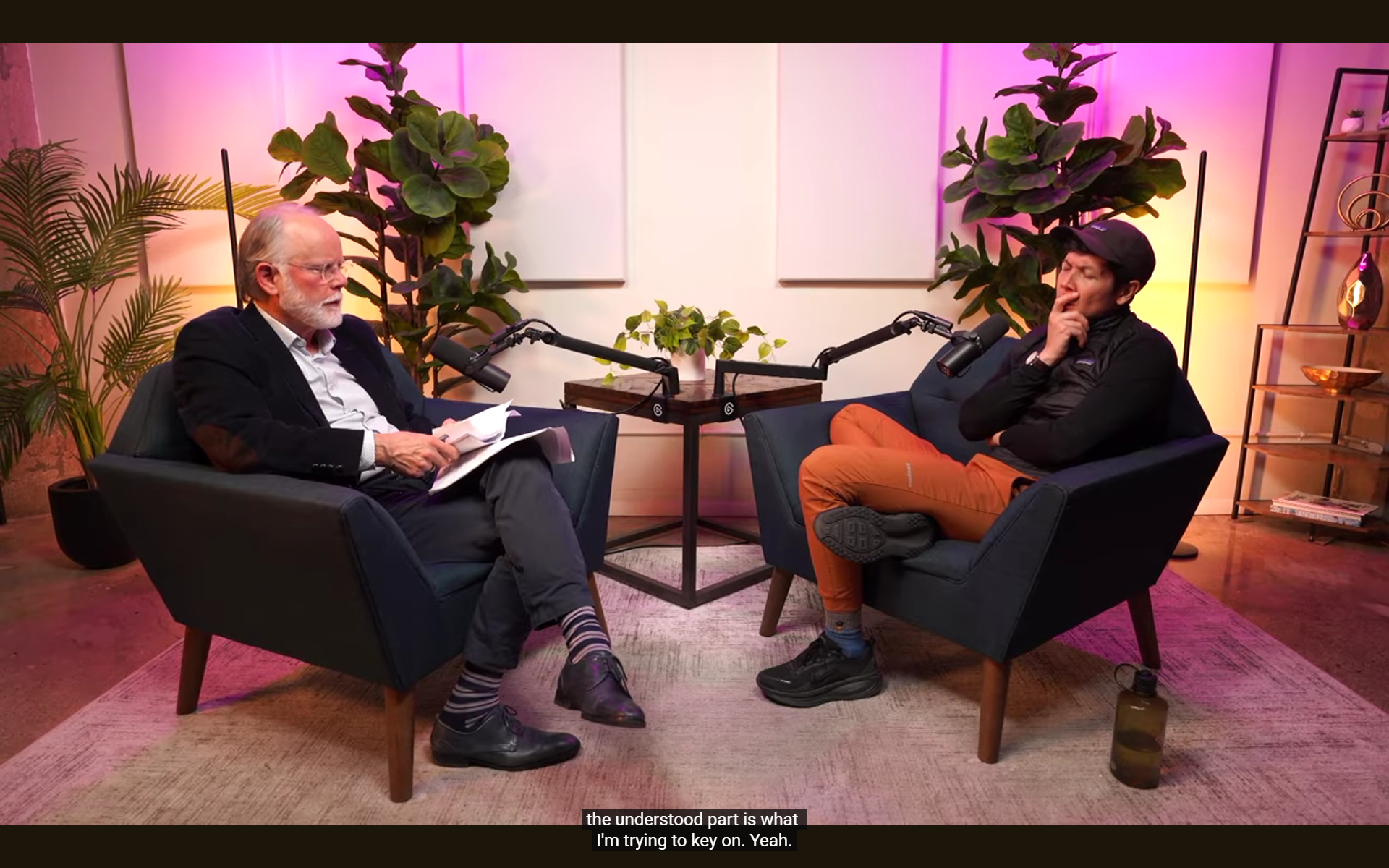
Enjoy a video produced by the Alfred Adler Institute in Suisse Romande:
Three Psychodynamic Approaches to Psychotherapy: Erik Mansager, Kenneth James, and Nancy McWilliams

Resilience Counseling & Training Center (a NASAP Affiliate): News and Updates
Dr. William (Bill) Nicoll has recently accepted an invitation to serve on an editorial board of distinguished professionals for the new professional journal of the European Association of Applied Psychology (EAAP). Bill was invited based upon his recognized expertise in both academic and applied psychology along with his status as an honorary member of EAAP. This will be an open access journal dedicated to practical and innovative aspects of psychology. The journal will be the first multilingual psychology journal in Europe with all articles published in both English and the author’s preferred language.
Bill has also granted permission for a transcript of his 2024 video presentation to Ukrainian educators on what Ukraine’s teachers might consider in revisioning the nation’s schools for the future following the current war. His essay will appear in a forthcoming book by Edcamp Ukraine (in both English and Ukrainian). The book will be published on several Ukrainian platforms including the national media Ukrainska Pravda. Bill’s essay is entitled: “Obedience to Cooperation” based upon his work on incorporating resilience and psychosocial wellbeing promotion with youth.
Save the Date
February 5–7, 2027, Boston, Massachusetts
The Evolution of Adlerian Psychology: Building Further upon Adler’s Revolutionary Model
The Resilience Counseling & Training Center invites you to join us at a 3-day weekend seminar focused on future directions and evolutionary developments in Adler’s Individual Psychology theory and practice. Join us in learning and exploring new methods, future directions, and innovative techniques that promote resilience and well-being with clients in mental health, school, marriage and family, substance abuse, and trauma recovery counseling practice settings.
The conference venue will serve as a catalyst for addressing evolutionary directions, new challenges, and innovative methods and techniques. The Bostonian Hotel, located in the heart of Boston’s historic district, is only steps away from the very sites where the American Revolution began 250 years ago. Low group room rates available. Registration begins September 2026.
For further information contact RCTC via:
Email resiliencectc@aol.com or Website, www.resiliencecounselingcenter.com
Community Conversations for Living on Purpose (CCLP)
You are invited to be part of our monthly conversations which take place on the last Saturday of every month. Our next meeting will be on Saturday, May 30, 2026 from 10:00AM to 11:30AM (Eastern Standard Time) via Zoom. The topic for discussion is, How would we like to see social interest in this divided world?
Registration Link: https://us06web.zoom.us/meeting/register/3E5R3He4RRiZISXQkiMNmA
Following your registration, you will immediately receive a confirmation from Zoom with the 'Join Meeting' link.
If you do not receive a registration confirmation, you have any difficulty registering, or you have questions, please email us at cclpconnections@gmail.com.
To read more about this event, visit our website at http://www.communityandconnections.ca/conversation-topics.html.
Regards,
Charmaine McIntosh, Psy.D.