


Welcome to The Connection,
NASAP’s Online Newsletter
March 2026 Issue
Dear Fellow Adlerians:
For the past two years, I have been on a mission to produce a one-hour documentary film, Soul Metaphors: The Alfred Adler Story. NASAP has been a faithful companion in this journey. Some wonderful NASAP members and Adlerians have been supporting me with this project. Hallie M. Williams, our president, was instrumental in developing a federal grant proposal and will appear as an expert in the film, if it is financed. Bengu Erguner-Tekinalp, our past president, is also slated to appear as an expert in the film and has offered to screen the film and host a focus group at Drake University.
Additional experts to appear in the film will include: Steven Beller, an independent historian and author of Vienna and the Jews; Lisa Coleman, president of Adler University; Eugene DeRobertis, professor at Brookdale College and editor of The Journal of Phenomenological Psychology; Raissa Miller, associate professor at Boise State University and an expert in Adler and neuroscience; and Peter Singer, professor emeritus at Princeton University and the grandson of one of Adler’s original followers, David Ernst Oppenheim.
The film will be directed by Early Light Media, a production company in Maryland which has produced programs for HBO, National Geographic, PBS, and other national outlets. Maryland Public Television, a PBS member station reaching 1.2 million viewers, has expressed interest in broadcasting the film.
Besides the screening at Drake University, other screenings are also planned with the American Psychological Association (Division 32 - Humanistic Psychology), Adler Graduate School, Adler University, Boise State University, Brookdale College, Fordham University, Temple University, University of North Carolina – Chapel Hill, and the Washington, D.C. Jewish Community Center.
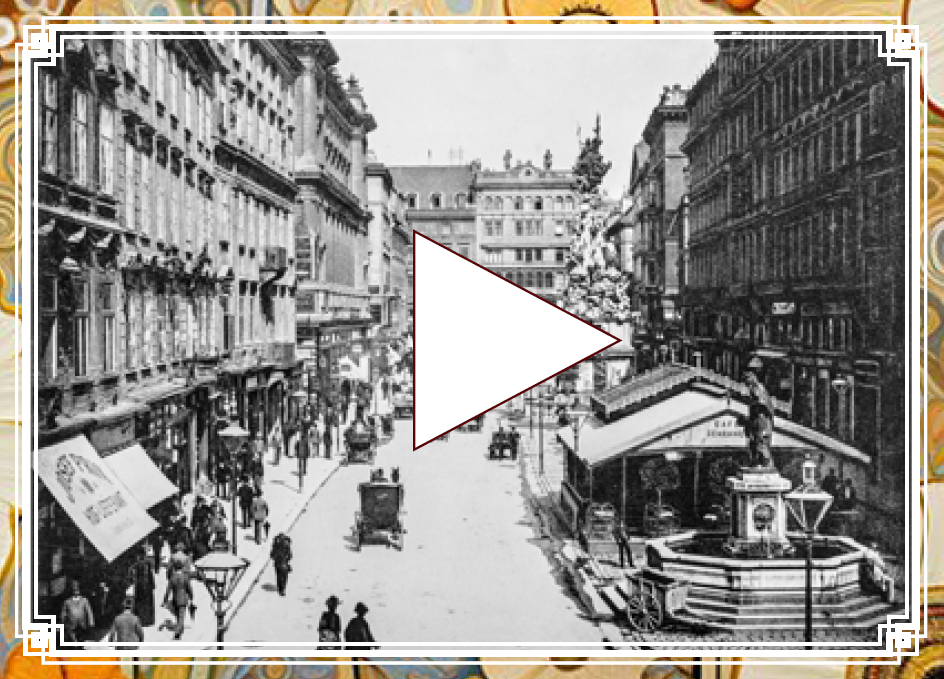
I invite you to enjoy the film trailer by clicking here or on the picture at the top right of this letter.
I am also humbly soliciting donations for this project, although there is, of course, no pressure to donate. All donors will be thanked on the project website, and major donors will be thanked in the film credits. You can make your U.S.-tax-free donation online here. It is my hope to begin filming in early 2027 once sufficient funds are raised.
Sincerely,
Ellen Alderton, Editor, The Connection
Watch the Film Trailer for Soul Metaphors: The Alfred Adler Story
Dear Fellow NASAP Members:
As I write this in February, NASAP joins the nation in celebrating Black History Month. For us, this is more than a cultural observance; it is a moment to reflect on how the principles of Individual Psychology have historically intersected with the struggle for human dignity, equality, and social justice.
Alfred Adler’s vision of Gemeinschaftsgefühl—social interest—was never intended to be an abstract theory. It was designed to be a lived reality. This is perhaps most visible in the work of two giants of Black history who recognized the profound power of Adlerian thought:
Dr. Martin Luther King Jr., whose pursuit of the “Beloved Community” mirrors our own search for a world defined by belonging and mutual respect. Dr. King understood that the psychological health of a nation depends on its ability to see the inherent worth of every individual, a core tenet of the Adlerian tradition.
Dr. Kenneth Clark, the pioneering psychologist whose “doll tests” were instrumental in the landmark Brown v. Board of Education decision. Dr. Clark was deeply influenced by Adler’s work on the inferiority complex and the psychological impact of social exclusion. He demonstrated to the world that systemic injustice is not just a legal failing, but a profound psychological wound that stunts the human spirit.
As we navigate the complexities of our current world—not least of all in my own community of Minneapolis—we are reminded that history is not just behind us; it is within us. The challenges we face today in our streets and our institutions are a call to return to our foundational values.
Our duty as a society is to remain a safe harbor for these ideas. By protecting the integrity of NASAP, we ensure that the scholarship and clinical tools needed to heal these social wounds remain available to all. We honor Black History Month by recognizing that the fight for justice is, at its heart, a fight for the right to belong.
This season, let us celebrate the resilience, the brilliance, and the social interest of the Black community. Let us learn from the ancestors who used the tools of psychology to break the chains of dehumanization. And let us renew our commitment to an Adlerian future where the dignity of one is recognized as the dignity of all.
In solidarity and encouragement,
Hallie M. Williams, Sr.
President, North American Society of Adlerian Psychology
President’s Message
The Courage of Connection: Celebrating Black History Month


Updates from HQ, March 2026
By Susan Belangee, Ph.D., NASAP Executive Director
Springtime is upon us and with that comes the usual flurry of activity associated with the upcoming annual conference in May – finalizing menus for the wonderful networking lunches and the closing banquet, populating the conference Yapp with all the great session details, and making sure we get the word out about how awesome this year’s conference is going to be. Be sure to spread the word widely about the conference and other Adlerian events! Information can be found on the website (www.alfredadler.org/events) and the specific conference pages (https://www.alfredadler.org/conference-landing-page).
The office has received some concerned inquiries about the location for this year’s conference. We are definitely monitoring the situation closely and the news of government agencies pulling out of Minneapolis is welcome indeed. We recognize there has been a significant impact on the city and its residents, so that is why we shared the list of organizations in need of contributions. Thank you to the section chairs who compiled the list that was emailed out to members on Friday February 13th. We hope all members consider helping in some way to support the city.
For those who may not know, the process of planning the annual conference begins years in advance with selecting a location. We strive to secure the most advantageous contracts for the conference, and this involves choosing locations two to three years in advance. Once contracts are signed, there will be a financial loss to break the contract that increases the closer we get to the dates of the conference. The only exception was in 2020 when COVID shut the world down, and even that year required threats of legal action to release us from the contract. I am sharing this, and I am willing to share even more details if desired, so that members and conference attendees get a glimpse of the process. Hotels and other conference-hosting locations now have clauses to protect them even in the event of pandemics. So, the NASAP leadership does the best it can to find places for the conference that are inviting and likely to make it a profitable event, but we have to find ways to manage unforeseen circumstances without financially crippling NASAP.
This year, I think we have a wonderful opportunity to show support for the city in a multitude of ways. The main way to help is to attend the conference, which will provide revenue and jobs for the hotel staff and local businesses attendees, as well as making donations. The conference also supports NASAP’s ability to operate; as a non-profit member organization, NASAP relies on the income from the annual conference. So please join us in Minneapolis in May! Opportunities to volunteer and get free registration are still open; check the website for the latest information.
May brighter days ahead be plentiful for all of us. Please come say hello and introduce yourself at the conference! I look forward to seeing familiar faces and new ones, too!
See you soon,
Susan
NASAP Conference Updates
The 2026 Annual Conference will take place May 28-31 in Minneapolis, Minnesota. Learn more about the conference here.


Attend the Toronto Adlerian Psychotherapy Salon
Dear Adlerian Friends:
Paul Rasmussen, the developer/creator of ART: Adaptive Reorientation Therapy, will be on the faculty of Horizon 2026: The Toronto Adlerian Psychotherapy Salon, taking place June 18-20, 2026 in (where else?) Toronto. Paul is the author of The Quest to Feel Good (2010) among many other articles and books, and his work with the meaning and experience of emotions is central to modern Adlerian therapy. Paul will be demonstrating his model, participating in panels, and answering questions during a conversation hour.
Don't miss this opportunity to see one of the premier Adlerian theorist/therapists in the world as well as 20 other guests and presenters. For more information, reach out to horizons@adler.ca.
Visit this link to see the conference website.
Sincerely,
James (Jim) Robert Bitter, Ed.D., NCC
Professor Emeritus of Counseling
Department of Counseling and Human Services
East Tennessee State University
Earn Free Continuing Education Credits
The NASAP Continuing education project is offering free CE credits. In March, the free article is Adler’s 1932/1935 article “The Structure of Neurosis.” This article describes the dynamics of organ inferiority, pampering, and neglect in the development and maintenance of neurosis and identifies four forms of neurotic movement. It emphasizes the importance of a holistic and ideographic approach. You earn 0.9 CE hours for reading this article.
In April, the free article is Adler’s 1936 article “The Neurotic’s Picture of the World.” In this article, the universal striving for success and the power of pampering to distort a person’s relations to the world and thwart the adequate development of social feeling are illustrated with a case study. Adler focuses on identifying with the person to understand how that person experiences the world through his neurotic apperceptive schema, his “private sense.” You earn 1.4 CE hours for reading this article.
Getting credit is simple. Go to https://nasap.thinkific.com/, create an account if you don’t have one, then search for the articles by author and year (Adler, 1932/1935 and Adler, 1936). Make sure you have the correct article by checking the title. Download and read the article, answer the quiz. You will get a certificate from NASAP to document your work.
References
Adler, A. (1932/1935). The Structure of Neurosis. International Journal of Individual Psychology, 1(2), 3-12. (Originally published 1932. Der Aufbau der Neurose. Internationale Zeitschrift fűr Individualpsychologie, 10, 321-328). [5550 words; 0.9 CE hr., $31.50]
Adler, A. (1936). The neurotic’s picture of the world. International Journal of Individual Psychology, 1(3), 3-13. [8,400 words, 1.4 CE hrs., $28]


Community Conversations for Living on Purpose (CCLP)
You are invited to be part of our monthly conversations which take place on the fourth Saturday of every month. Our next meeting will be on Saturday, March 28, 2026 from 10:00AM to 11:30AM via Zoom. The topic for discussion is Joy and Connection in Everyday Living.
Registration Link: https://us06web.zoom.us/meeting/register/3E5R3He4RRiZISXQkiMNmA
Following your registration, you will immediately receive a confirmation from Zoom with the 'Join Meeting' link.
If you do not receive a registration confirmation, you have any difficulty registering, or you have questions, please email us at cclpconnections@gmail.com.
To read more about this event, visit our website at http://www.communityandconnections.ca/conversation-topics.html.
NASAP Sections Update
TLC 2026 Meeting Dates and Leadership Opportunity
Please hold the following dates in your calendar:
Wednesday, February 18 – 12:00 PM EST
Tuesday, March 17– 12:00 PM EST
Tuesday, April 21 – 8:00 AM EST
Monday, May 18 – 12:00 PM EST
We have intentionally varied meeting times to support our international community, thank you for your flexibility and global spirit. Feel free to share this invitation with colleagues who may be interested in joining our vibrant TLC circle.
February 18th Meeting Agenda:
We are trying something new with our TLC meetings this year. Instead of us setting the agenda, you’ll choose what we explore each session.
Possible Topics Include:
Coaching demos with group feedback
Coaching demos with real‑time questions
Leadership problem‑solving in the spirit of Eva Dreikurs
Business topics—starting a solo practice, marketing yourself, moving past the fear of selling
Interviews with section members
Problem‑solving around client or business challenges
We’re open to other ideas too. The goal is to make each meeting useful, engaging, and relevant to those in attendance.
Seeking New TLC Chair/Co-Chairs
On a different note, we have been co‑chairing this section longer than the typical NASAP term, and we have both decided to step down after the conference in May. We are now looking for someone (or a pair of someones) to step into the co‑chair role.
If you are curious about what the role involves—or if you think you might be interested—please reach out to either of us. We’d truly love to talk with you. The only requirement is that you’re an active NASAP member.
If you haven’t had the chance yet, we invite you to join NASAP so you can stay connected and engaged with all eight interest sections, including TLC.
We’re grateful to come together again and are looking forward to a season filled with meaningful connection and growth.
Warmly,
Pascale and Kevin
pascale.brady@thechallengecoach.com
Clinical Practice Update
Hello from Clinical Practice! This has been an exciting season of growth from our corner of NASAP. In 2025, Jamie Shuler joined Grace Jacobson as Section Co-Chairs, and we added three new Members-at-Large to our cohort. We began our monthly Adlerian consultation group and met demand by adding a second monthly meeting (now offered second Wednesdays and fourth Tuesdays). We’ve received requests from all over the world for Adlerian consultation groups, and our hope is to meet this need as leaders emerge across time zones.
In May 2026, we plan to host a table at the annual NASAP conference’s Section Meet & Greet, where we can engage with new members and connect with longstanding members. Our gears are turning with ideas for increased training opportunities, webinars to earn CE’s, and consultation groups that meet longer and dig deeper than our current one-hour sessions. Our goals for Clinical Practice are to continue expanding and cultivating social interest, provide the support necessary to help NASAP run smoothly, and serve this community with a heart of horizontal striving.
Also exciting in 2026… We have leadership positions opening up! Please consider running if you are interested, and reach out for information if you have questions. Both types of positions count toward leadership experience required to become a NASAP Diplomate in Adlerian Psychology.
Section Co-Chair: One position open. A three-year commitment to lead monthly consultation groups, attend COR meetings annually and quarterly, engage with Section Members and Members-at-Large, and run the back-end tasks required for managing membership.
Members-at-Large: Up to three positions open. A one-year commitment to meet regularly with Section Co-Chairs, attend/lead consultation groups, and learn the ins and outs of how our section functions.
Below, you can find some information about the leaders of the Clinical Practice Section, as well as their reflections on their experiences in NASAP. Please stop us and say hello if you see us at the annual conference!
Grace Jacobson, Section Co-Chair
Hello! I’m a psychologist in Astoria, Oregon. I attended Adler University in Chicago and had the privilege of being influenced by Adlerian clinicians who not only shared their expertise and knowledge, but who also provided a visceral invitation to belonging. I am coming to the end of my term in May, and am very proud of accomplishments I’ve contributed to, including merging the Adlerian Professionals and Integrated Professionals Sections into one Clinical Practice Section, revising bylaws to increase member participation and leadership opportunities, and getting the monthly Consultation Group off the ground. My experience echoes what so many have remarked on at our conferences: We feel invigorated and encouraged when Adlerians spend time together. I hope you will join some of the offerings we’ve created, and bring that energy back to your clients and communities.
Jamie Shuler, Section Co-Chair
Jamie Shuler, here! I am a marriage and family therapist in Minneapolis. I entered the mental health field after experiencing personal transformation under the care of an Adlerian psychotherapist and have been a devotee of Adler ever since. I joined Clinical Practice as Co-Chair in 2025 and am continually encouraged and impressed by the social interest in action here. I look forward to engaging with our members during consultation groups, and I am excited to continue growing and learning with the NASAP community.
Sarah Jackson, Member-at-Large
Hi, I’m Sarah Jackson. I am currently completing my master in Clinical Mental Health Counseling, where I developed a deep appreciation for Adlerian theory. Over the past few years with NASAP, I have gained a greater understanding of the meaningful impact of cultivating community and have witnessed the powerful transformations that emerge within supportive spaces. Learning from and alongside the Adlerian community through NASAP has been a privilege, and I look forward to continuing my growth as an Adlerian professional.
Natalee Bigger Stockdale, Member-at-Large
I am a doctoral student researcher and art therapist whose work centers on trauma-informed practice, mixed methods inquiry, and the integration of Individual Psychology into contemporary clinical and educational settings. Through my involvement in NASAP, I’ve learned how meaningful early and mid-career relational support can be within the IP community. This experience has deepened my appreciation for shared professional courage and the collective wisdom that emerges in supportive networks.
Edy Nathan, Member-at-Large
The cave awaits. It’s dark, it hurts, it’s a place no one chooses. Being in it means daring to meet empathy and compassion. The depths of the soul’s work is especially potent when in the grip of grief and the imprints of trauma. Adlerian theory deeply influences my work in private practice as a clinical social worker and certified sex therapist. My second book is on its way and the working title is Invisible No More: Liberate the Self from Traumatic Events and Thrive. My core message to everyone: It’s time… to dare to live.
The Clinical Practice Section serves all professionals who identify as Adlerian and adopt Adlerian perspectives, techniques, and strategies in their work. Our members include students, licensed and pre-licensed clinicians, professors, researchers, coaches, and health and wellness professionals. We strive to create a supportive network and provide networking and training opportunities for members. If you have questions about the Clinical Practice Section, please email nasapclinicalpractice@gmail.com. We'd love to hear from you!
Yours in Social Interest,
Jamie Shuler and Grace Jacobson, Section Co-Chairs





Answers to the November photo challenge...
Answers to the November photo challenge...
Dr. Jim Sulliman provided us with this information on the November photo challenge:
“This picture was taken at the Fairmont Hotel in Dallas, Texas at our 1998 conference. We had not had one in Texas before, and I was happy to help put it together which included cowboy shirts and hats, as well as a trip to the West End where everyone learned the “Texas Two- Step.” I am kneeling on the right side. Bob Armstrong and John Newbauer are behind me. In the center are Rocky Garrison, Mary Maguire, Becky La Fountain, and Edna Nash with hands raised in the back. Lots of past-presidents in this picture!”

EvolvAbility: An Adlerian Perspective
By Anne Grady
Anne Grady is a resilience and adaptability expert who helps people grow forward when life goes sideways. A bestselling author, speaker, and entrepreneur, Anne blends neuroscience, humor, and hard-won wisdom to teach practical skills for navigating change. Her new book, EvolvAbility: Growing Forward When Life Goes Sideways, offers a science-backed roadmap for thriving through disruption. Anne’s work has been featured in Forbes, Harvard Business Review, and Fast Company.
For more than 25 years, I’ve had the privilege of working with some of the world’s most respected organizations, including Dell, Microsoft, Google, the U.S. Air Force, and many others. I’ve sat with leaders and teams as they wrestled with uncertainty, burnout, and constant change, helping them cut through the noise and focus on what matters most. But my most powerful lessons didn’t come from conference rooms or keynote stages. They came from raising my son, Evan.
Evan’s life has been anything but predictable. Diagnosed with autism, developmental delays, and significant mental health challenges, his journey has forced me to let go of the life I thought we’d have and embrace the one we do. This journey has taught me to find strength in uncertainty and even humor in chaos.
Through it all, I’ve come to realize that resilience, the ability to bounce back, is no longer enough. We need to move beyond resilience to EvolvAbility: the ability to adapt, change, and grow forward when life goes sideways. These are core facets of psychological flexibility, one of the strongest predictors of success, happiness, and well-being.
EvolvAbility echoes Alfred Adler’s view that we each hold the creative power of the self — the capacity to choose our responses, reinterpret our circumstances, and steer our lives toward greater contribution. It also reflects Adler’s belief in purposiveness: we are always moving toward something, even in difficult times. When we choose growth, we step into our creative power.
There are six pillars to EvolvAbility, and each is rooted in Adlerian psychology:
E — Emotional Aptitude
Adler emphasized that feelings are not fixed forces; they are interpretations that can be redirected toward useful action. Emotional aptitude is the ability to recognize and regulate emotions so we can:
● Stay grounded under stress.
● Respond rather than react.
● Foster psychological safety.
● Build trust and belonging.
Encouragement, the heart of Adlerian practice, is the act of inspiring courage in others. When we model calm and connection, we invite others to access their own courage.
V — Values
Values serve as the anchor when everything around us shifts. They operate much like Adler’s guiding fictions — the ideals that provide meaning and direction for our lives and choices. By aligning our decisions with clear values, we can:
● Clarify what matters most.
● Identify what is non-negotiable.
● Reduce anxiety that comes from second-guessing, navigating competing priorities and decision overload.
Research shows when our actions align with our values, we experience greater well-being, less stress, and stronger resilience.
O — Optimization
Adler viewed humans as goal-oriented, whether consciously or not. Optimization is about directing our energy toward what matters by:
● Prioritizing meaningful work over reactive busyness.
● Setting boundaries to protect energy.
● Creating routines that nurture well-being.
Practicing optimization allows us to guard and focus our most valuable resources: our time, energy, and attention.
L — Leadership
Effective leadership today is less about hierarchy and more about social interest — the Adlerian cornerstone that reflects concern for the welfare of others and commitment to the larger community. The most effective leadership starts with self-leadership. Leaders either amplify stress or help regulate it. Some of the most powerful acts of leadership happen in quiet, invisible moments. They might include:
● Taking a breath before reacting.
● Admitting when you’re wrong.
● Saying no to one more meeting so you can say yes to your well-being.
● Pausing to reset your energy before walking into the room (or Zoom).
When we operate out of social interest by modeling the behavior we want to see — whether it’s integrity, accountability, or vulnerability — others are more likely to mirror those behaviors.
V — Versatility
Adler believed no one is bound by their past; each of us can creatively reinterpret our situation and choose new patterns. Versatility is the ability to shift perspectives, behaviors, and strategies based on the situation so you can meet uncertainty with skill instead of stress. Being versatile allows you to:
● Reframe challenges.
● Build cognitive and behavioral flexibility.
● Change course without losing purpose.
Being versatile allows you to make more effective decisions, communicate more clearly, and foster greater trust with the people around you.
E — Empowerment
Empowerment begins with recognizing that, even amid chaos, your mindset, energy, and choices belong to you. This aligns with the Adlerian principle of agency — we have the power to choose our responses, develop social interest, and balance our personal goals with community well-being. One exercise I recommend for staying empowered is to make a list of everything that is weighing on you and cross off everything you can’t control. Then pick one thing in your control and ask:
● Is there action I can take?
● Is there a problem I can solve?
● Can I reframe the story I’m telling myself?
This exercise helps you redirect your limited time, energy, and mental resources toward the things you can control so you can make choices aligned with your values.
Tying It Together
Adler taught that striving for growth, not perfection, enables individuals and communities to flourish. EvolvAbility translates this philosophy into a modern leadership capability. Whether you’re managing a team, raising a child, or trying to stay afloat in a world that changes by the minute, these are the skills that help you lead, live, and evolve


Toward a 21st Century Adlerian Vision
By Robert Atkinson, Ph.D.
Robert Atkinson is an award-winning author and developmental psychologist whose work bridges storytelling, transformation, and the evolution of consciousness with a unitive vision. His latest book, The Way of Unity: Essential Principles and Preconditions for Peace (2025) offers a framework for putting into action the unitive wisdom underpinning our collective evolution. He is the author of 11 other books and founder of One Planet Peace Forum.
As a graduate student in counseling and cross-cultural developmental psychology many years ago, there were several of Alfred Adler’s key concepts that helped inspire and guide my approach to trying to make sense of how and why our growth seems to be directed toward an unfolding wholeness.
Most recently, Adler’s key concepts such as the importance of the holistic nature of human beings and the unity of the individual, feelings of belonging, relationships within and beyond the family, the value of a strong community life, and shared responsibility have risen to the surface as supportive of the unitive principles and strategies in my latest book, The Way of Unity: Essential Principles and Preconditions for Peace.
With its emphasis on holism, Adler’s Individual Psychology is not to be misunderstood as individualistic, but rather a way to understand how the goal of an individual undivided wholeness directly connects to achieving collective wholeness on all social levels, including global. This interconnectedness brings us directly to his holistic psychology, which neatly ties together the interdependence of individual, community, social, and systems psychology.
This social context of all things interrelated can further be seen to extend beyond the planetary to the cosmic sphere, which not only have indigenous traditions understood but also now the latest scientific discoveries confirm, beginning with David Bohm’s Wholeness and the Implicate Order and culminating in the 2025 Nobel Prize in Physics. The hidden wholeness of the universe that is reflected in the hidden wholeness of the individual, and thus in the human family, is discussed in Chapters 1 and 2 of my book, supporting and perhaps extending Adler’s views on holism, social justice, and a systemic perspective.
For the individual, in order to achieve a unity of behavior, or a holistic understanding of who we are, what our purpose might be, and how all things are tied together, our challenge becomes the essence of empathy itself – seeing, as Adler says, with the eyes of another, listening with the ears of another, and feeling with the heart of another. This approach is one of the surest ways of growing into what is called in my book a “unitive consciousness,” or a consciousness that brings about unity. This reciprocal way of viewing things is also a bridge to achieving a deep and lasting unity-in-diversity, as discussed in Chapter 1.
Ultimately, it is how we engage with and contribute to society that determines our individual wellbeing. Adlerian theory ties in to building strong, vibrant communities that would apply common principles to bring about unity for the purpose of achieving a collectively determined outcome, as I discuss in Chapter 6, “Unity-in-Action for the Betterment of the World.” This chapter explores a unitive approach to change, capacity building, empowerment, coherence, and offers many models of social action to consider. The strategies discussed here, including a collaborative learning process centered around the practice of consultation, are all designed to support and encourage feelings of belonging and relationships that bring about unity, especially those that bring about gender equality, a strong community life characterized by shared responsibility, and the wellbeing of humanity.
Overall, a beneficial way to understand and gain a wider context for Adler’s holistic psychology might be in considering the three unitive principles discussed in Chapter 3, the wholeness principle, the evolution principle, and consciousness principle.
To emphasize the goal, or outcome, of Adler’s holistic psychology, we could remember and perhaps even spotlight what he is offering as the psychological preconditions for creating inner peace, interpersonal peace, and world peace, as addressed in Chapters 7, 8, and 9 of my book.
Adlerian theory – and practice – are very much needed in a world driven by fear and division. His ideas contribute much to a world where every person would feel seen, valued, and connected, a world characterized by compassion and cooperation. There will come a time when the unity of the individual and the unity of the human family are understood as essential to the wellbeing of the whole.
I'm Not Their Homeroom Teacher: An Adlerian Social-Emotional Experiment in Chinese Classrooms
By Wang Yang
Wang Yang is a social-emotional learning teacher working in public schools in Beijing, China and trained in Adlerian psychology.
I teach social-emotional learning in Beijing public schools using Adlerian psychology. I'm not the homeroom teacher, and I don't teach Chinese, math, or English. I come into the classroom during mental health or class meeting periods—slots that often feel optional in a system driven by grades and rankings. Each time I walk in, I wonder, “Can an outsider build real connection in 40 minutes?”
The first class is usually emotionally flat, with the students clearly thinking, “Oh, another teacher.” The homeroom teacher introduces me quickly. Some kids keep doing homework. Others whisper about reading during my lesson. In their world, teachers mean rules and evaluations. A teacher who doesn't grade you doesn't immediately matter.
Then sometimes the shift happens faster than I expect. When I returned to a fourth-grade class for our second session, spontaneous applause broke out as I reached the door. We'd spent only 40 minutes together the week before, but they remembered. “This teacher came back.”
That day we created a simple ritual. I'd say, "Class is over," and they'd shout, "I'm awesome!" When they yelled it, many had shining eyes. I realized it wasn't just fun—it was a rare moment of openly affirming themselves at school.
My role sits slightly outside the formal structure. Teachers' schedules are packed. Students switch rapidly between subjects. Walls display "excellent homework." Students' first questions are practical: Do we take notes? Does this count? If not, do I need to listen? Some homeroom teachers are supportive. "The kids need this." Others worry, "Will your lively class affect their study habits?"
But being outside also creates space. I don't control punishment or rewards, making it easier to meet students as equals. They know I won't affect their grades, so sometimes they say real things. Adlerian psychology gives me a compass. I help students experience belonging, significance, and cooperation—even briefly.
One way I start is with a "name circle." We sit in a circle. Each student shares their name, something they feel proud of, and the quality behind it. At first, the activities are awkward. Some say directly, "There's nothing I'm proud of." I don't force it. I invite them to listen first.
Small stories emerge: practicing piano daily, helping parents care for siblings, signing up for a speech contest. I help name the qualities beneath actions—persistence, responsibility, courage. Near the end, the student who said "nothing" raises his hand. He didn't do well on an exam, but he corrected every mistake. I ask what quality he sees in his work. He thinks, "Maybe... the ability to come out of feeling discouraged." The room quiets. A few classmates nod.
In Adlerian terms, I use encouragement, not praise. I don't say "You're the best." I name qualities that can be practiced: "You were willing to try." "You stayed with something hard." In a culture where performance means scores, moving from "I have nothing" to "maybe I have something" matters.
Another challenge is the student who constantly interrupts. "Teacher, me! Me!" As an outsider with limited time, I can't handle this interruptions as a homeroom teacher would. I try something simple; no labels, no shame. I pause, and look at him. "I hear you." Then: "Let's listen to others first—I'll come back to you." Sometimes, I ask him to summarize after another student speaks.
The interruptions don't vanish overnight. But slowly, he begins to wait. Occasionally he says on his own, "Let her go first." These small changes signal a shift—from proving "I matter" by breaking in, to finding a place in a cooperative rhythm.
My presence is light. Sometimes I lead one class a week, sometimes a few visits per semester, sometimes my time is canceled for exams. One lesson won't transform a child's environment. But I keep returning because I've learned to ask different questions. When a child withdraws, are they protecting themselves? When they disrupt, are they clumsily trying to feel influence?
Brief encounters can leave real marks. A class ending with a loud, united "I'm awesome!" may be just 40 minutes, but for some students, it's 40 minutes of being seen, respected, and included. As an outside teacher, that's the trace I hope to leave.


Let Hope Grow
By Jess Minckley (2023)
Digital Drawing

Call for Contributions
The Connection is your newsletter, and we need your contributions! Please send your news items, videos, reminders, photos, and feature-length articles to our editor, Ellen Alderton, at NASAPNews@gmail.com.